
Beyond the Numbers - Corcept Therapeutics
When the market sees a niche biotech, smart investors see a monopoly in disguise.
Wall Street often dismisses Corcept Therapeutics as just another small biotech company treating an obscure condition. The company's flagship drug Korlym treats hyperglycemia in patients with Cushing's syndrome, affecting roughly 10-15 people per million. Most analysts see a limited addressable market and move on to sexier growth stories.
But the numbers tell a different story entirely.
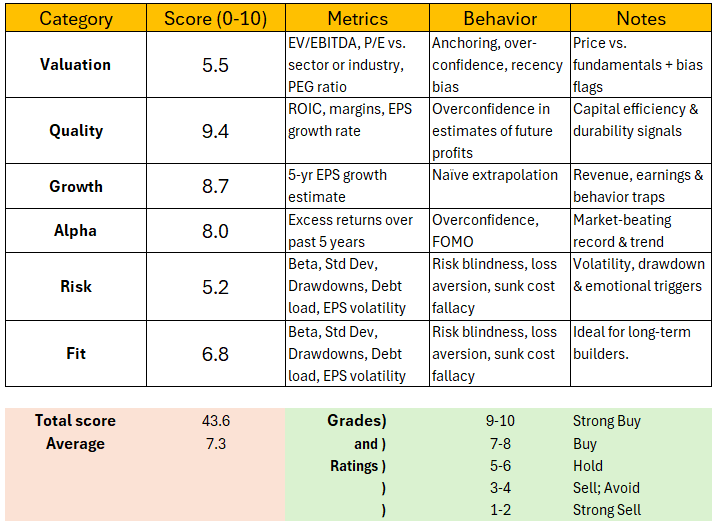
The Zen Score Dashboard
The Zen Score is a composite rating that evaluates a stock's alignment with disciplined investing principles. It's not just
about performance - it's about how that performance is achieved, and whether it fits a resilient, long-term strategy.
The Monopoly Psychology
Here's what others miss: Corcept essentially owns the cortisol modulation space. The company has developed over 300 proprietary molecules and launched Korlym in 2012 as the first cortisol receptor blocker for controlling hypercortisolism. Here's what others miss: Corcept essentially owns the cortisol modulation space This creates a powerful psychological barrier for competitors. The cortisol pathway is complex, poorly understood, and requires specialized knowledge that takes years to develop. Big pharma typically avoids such niches unless the market opportunity becomes obviously massive—by which time Corcept will have an insurmountable head start.
The Hidden Expansion Story
The behavioral bias here is narrow framing—investors see Cushing's syndrome and stop thinking. But prolonged cortisol exposure contributes to diabetes, obesity, hypertension, Alzheimer's disease, and various cancers. Corcept isn't just treating a rare disease; they're potentially addressing cortisol dysfunction across multiple common conditions.
Recent developments support this thesis. The company just submitted a new drug application for relacorilant, their next-generation cortisol modulator, and initiated the MOMENTUM trial to study hypercortisolism in patients with resistant hypertension. These aren't desperate pivots—they're logical extensions of core expertise into larger markets.
The Durability Factor
Most biotech investors suffer from recency bias, focusing on the latest trial results or FDA approvals. They miss Corcept's fundamental advantage: cortisol modulation is a platform technology, not a one-drug story. Recent Phase III results showed sustained improvements and high tolerance over six years, demonstrating both efficacy and safety that creates patient loyalty.
The Contrarian Opportunity
While growth investors chase AI and tech stocks, Corcept quietly builds a fortress in cortisol therapeutics. The psychology working in investors' favor here is simple: boring businesses in unglamorous markets often generate superior long-term returns because they face less competition and lower valuation multiples.
The market may eventually recognize that Corcept's cortisol expertise positions them to address multiple billion-dollar therapeutic areas. But by then, today's prices will look like gifts.
Sometimes the best opportunities hide behind medical complexity that scares away casual investors.