

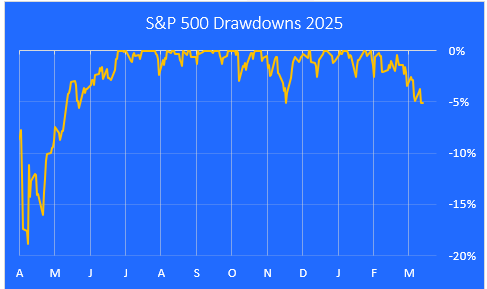
At the risk of sounding like a Cassandra, I think today's market decline portends even lower prices going forward. It's not the magnitude of the decline that I'm concerned about, but the fact that we closed more than 5% below the all-time high for the S&P 500. That could be an important rubicon that we just crossed.
The Drawdowns
The clearest picture I have of the smooth sailing we have been experiencing until recently is displayed below. The drawdown may only be 5.1%, but that's enough to get market technicians all riled up. And this is a critical moment when the dip-buyers have faithfully shown up for the past year. Will they show up tomorrow?
Other Indicators Are Flashing Yellow
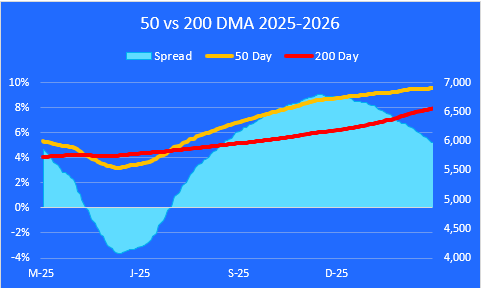
The next chart shows the narrowing of the spread between the short-term (50 day) and long-term (200 day) moving averages. This narrowing began in early December last year, and it's picking up speed now. If the 50 day should cross below the 200 day, that would be what technicians call a "Death Cross." (A little too dramatic for my taste, but you get the point.)
This Is Where We Are Today
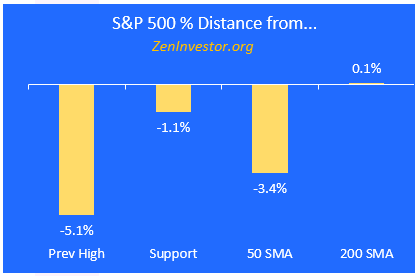
We've covered the drawdown and the moving average narrowing, and now I'd like to point out that we have broken key support (6695 on the S&P 500). When this happens, the market often continues to decline until it finds a level where investors can no longer resist the temptation to buy the dip.
Also note that we are within 0.1% of the 200 day moving average - another psychological support level.
Bollinger Bands Widening Sharply
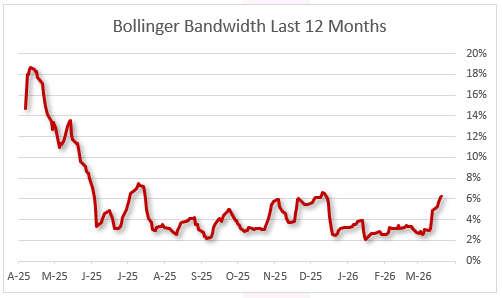
Bollinger bands are another way to gauge the level and trend of market volatility. The higher thee bandwidth, the higher the daily swings in the market. Just in the last week, we have gone from under 3% to over 6%. That's a significant move for this indicator.
Danger Zone Chart
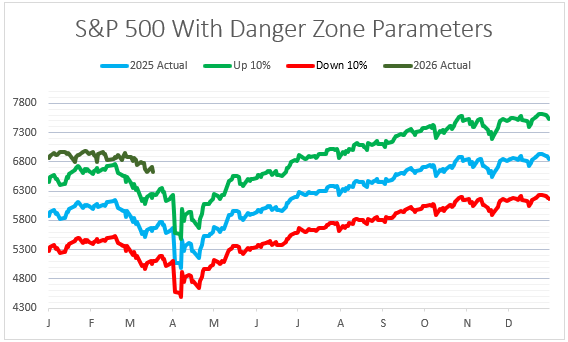
This chart looks a little busy, but it has something important to tell us. I have noticed over the years that when the market drops below its level from one year ago, it often spells the beginning of a trip all the way down to the bottom of the chart, which would be a 10% decline from last year at this time. We're not there yet, but I'm watching this one closely.
Interest Rates Are On The Rise
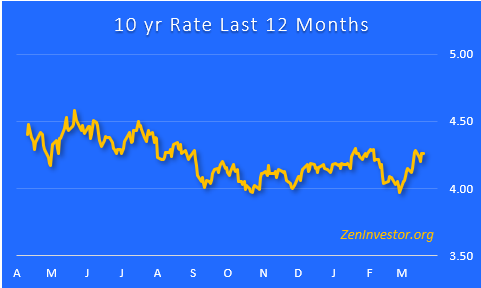
Wholesale inflation jumped last month, and it will probably rise even more, as energy costs are rising across the board. Investors see this as an excuse for the Fed to postpone their rate cuts until we get some clarity about the Mideast conflict.
The Dashboard
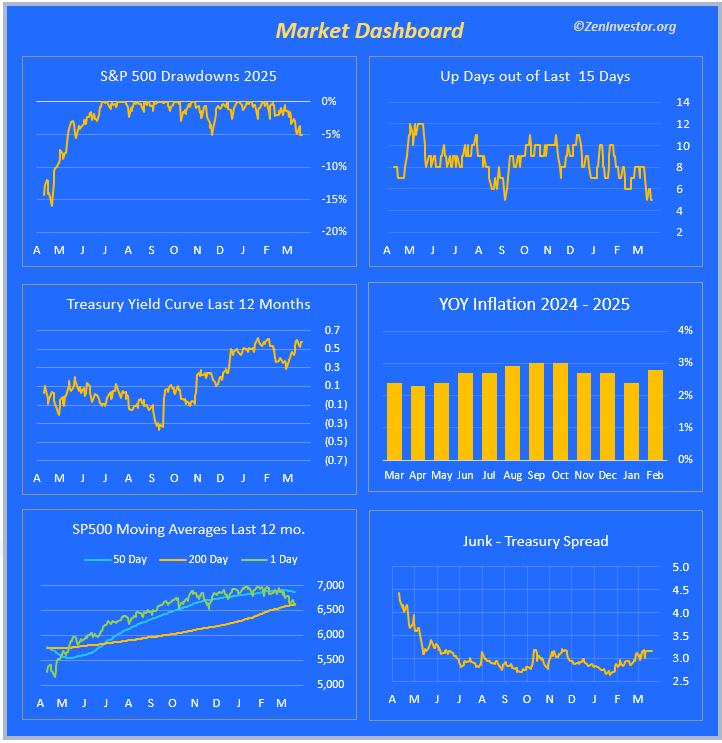
I'll end with my market dashboard, which is a collection of six charts that cover the market from different angles. Items of note include: we have only had 5 up days out of the last 15, a clear sign that the sellers are dominating the daily action.
On a positive note, the Treasury yield curve is positive and getting more so. That means the odds of a recession anytime soon are receding.
Inflation is ticking higher. The bar on my chart for February is taller than the actual number that came in - 2.4%. Still uncomfortably high.
The spread between investment grade debt and junk debt is rising, as bond investors demand a higher premium for taking on the additional risk.
Final Thoughts
I don't mean to sound the alarm when we are only down 5.1% from the old high. But I do think that today is an important day, given the fact that we haven't had a 5% pullback for nearly a year. It would be easy to say that this will all blow over, and the dip buyers will once again come to the rescue. But I think it's worth noting where we are, how we got here (hint: war in the Middle East), and where we might be headed next.
There are plenty of things to worry about. Valuations are stretched, making it harder to earn a decent return on investments made today. Inflation is still sticky. And the spike in oil, gas, and other energy staples is making it worse. Interest rates look to be headed higher, making it harder for companies to finance their expansion plans. And the Mag 7 stocks that have carried this market for more than three years are sputtering. We have seen mid caps and small caps step up and outperform, but higher rates could put a damper on that.
I already have 10% of my portfolio in cash, and if we show more signs of weakness next week, I will probably increase that to 15%. I play aggressive defense in weak markets and it has served me well over the years. If nothing else, you should review your holdings to find where you might be vulnerable.